Not Every Smile Means “I’m Fine”
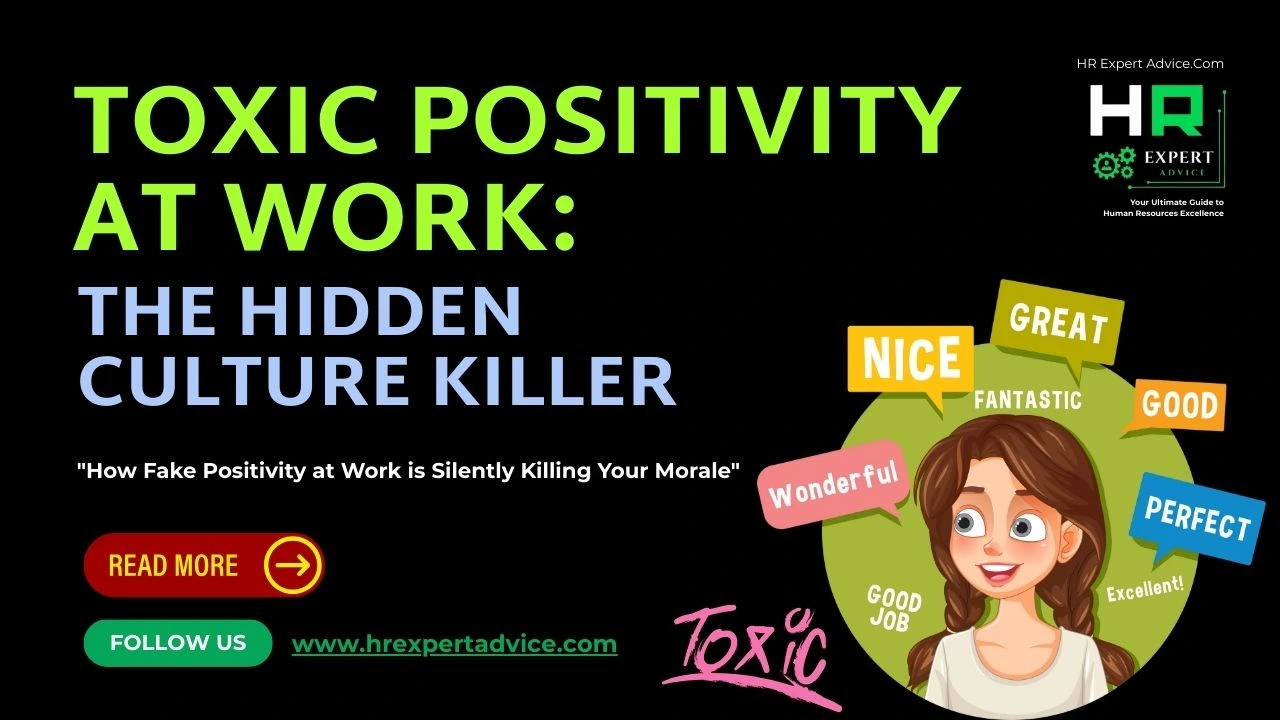
We’ve all heard it—”Good vibes only,” “Stay positive,” “No bad energy here.” But when those phrases dominate workplace conversations, they start doing more harm than good.
Toxic positivity is when constant cheerfulness becomes a mask that hides stress, burnout, and real emotion. And in a professional setting, it can silently dismantle your culture, one forced smile at a time.
🧠 What It Looks Like in the Real World
Picture this: an employee quietly struggling with a demanding workload. They bring it up, hoping for support. Instead, they hear:
“Just hang in there, you’re doing great!” “Let’s not focus on the negative.” “We’ve all been through worse.”
The intention might be kind, but the impact? It’s alienating. That employee now feels unheard, unseen, and expected to bottle everything up and move on.
Over time, people stop speaking up. Problems go unsolved. Morale dips, even as smiles stay pasted on.
🚧 Signs That Toxic Positivity Has Taken Root
- People hesitate to share concerns, fearing they’ll be labeled “negative”
- Feedback is sugar-coated, or avoided altogether
- Leaders push optimism during difficult situations—without offering support
- Emotional struggles are met with generic cheer, rather than empathy
This isn’t resilience—it’s repression.
Toxic Positivity
👂 So What Should Leaders Do Instead?
Let your people be real. Replace platitudes with genuine connection. Here’s how:
| What Not to Say | Try This Instead |
|---|
| “Stay positive.” | “I hear you—that sounds tough. Let’s talk about it.” |
| “It could be worse.” | “Thanks for sharing. How can I support you right now?” |
| “We don’t do drama.” | “We want honesty here—even when it’s uncomfortable.” |
This kind of language opens doors instead of closing them.
💡 Building a Culture of Psychological Safety
Want your team to thrive without faking it? Build a space where they can speak freely, even when emotions run high.
- Normalize emotions. Make it okay to feel overwhelmed, frustrated, or unsure.
- Train your managers. Give them the tools to listen deeply and respond with empathy.
- Ask, don’t assume. Use pulse surveys or anonymous check-ins to understand what people are really feeling.
- Model vulnerability. When leaders open up, it signals to others that it’s safe to do the same.
🔧 Real Culture > Surface Cheer
Culture isn’t made in feel-good quotes or polished town halls. It’s shaped in everyday interactions. When employees can raise concerns, admit mistakes, or share burnout without fear—they don’t just survive the job, they connect to it.
“People don’t leave jobs—they leave the pressure to pretend they’re okay.”
💼 Next Steps for HRExpertAdvice Readers
If this hit home, here’s what to do next:
✅ Connect with us for :
- a) free Culture Audit Template
- 📋 b) 10 Psychological Safety Questions to assess your team’s health
- 📞 c) Book a confidential strategy call if you’re ready to rebuild the emotional foundation of your workplace
Let’s replace forced positivity with something better: truth, empathy, and cultures where people feel safe to be human and perform better.